Where Automated Resumé Changes Fool the Bots — and Where GMA
Customizing resumes to navigate automated screenings forces a close look at the effectiveness of automated editing tools against software and human detection.
The limits of these bypass technologies become clear when we examine how basic and advanced filtering systems operate in hiring pipelines.
AI Detection Evasion: What Actually Gets Past the Filters
Resume bypass tools rewrite content, inject keywords, and change formatting to match job postings.
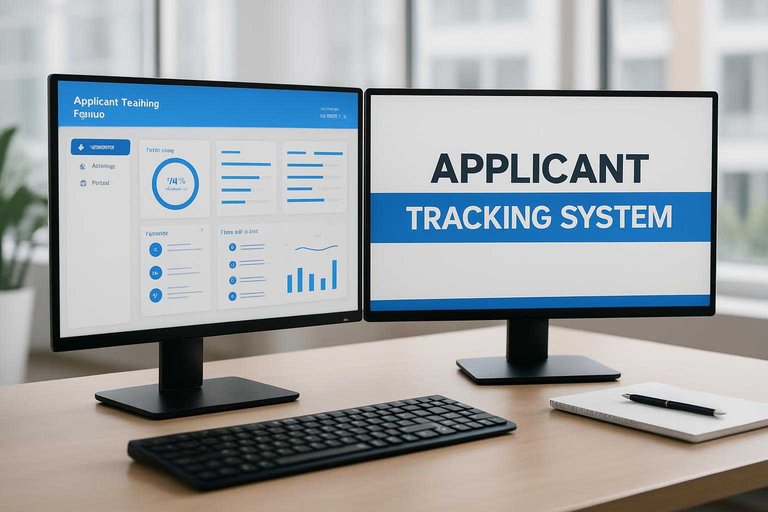
These methods work with entry-level Applicant Tracking Systems (ATS) that rely on basic pattern and keyword matching—the systems most common at small or mid-sized companies or in high-volume hiring.
By tailoring vocabulary and embedding required skills, applicants avoid instant rejection from filters using simple logic.
But when ATS platforms use advanced contextual analysis, as in enterprise-level systems or for specialized roles, these tactics break down.
These platforms spot unnatural phrasing, keyword repetition, and inconsistent formatting.
As a result, current automated tools mainly get through older or less sophisticated ATS; systems with sentence-level context and advanced pattern recognition (common after 2023) flag manipulated resumes quickly, usually in the first review cycle.
The Human Reviewer’s Blindspots — and Their Reactions to AI-
Recruiters pay attention to coherence, narrative flow, and relevance, not just keywords.
Bot-optimized resumes with well-integrated skills sometimes pass the first round when edits blend smoothly with the rest of the text.
Usually, those resumes face deeper evaluation in later rounds, such as interviews or reference checks, typically within two to six weeks—rigid phrases or awkward insertions become obvious then.
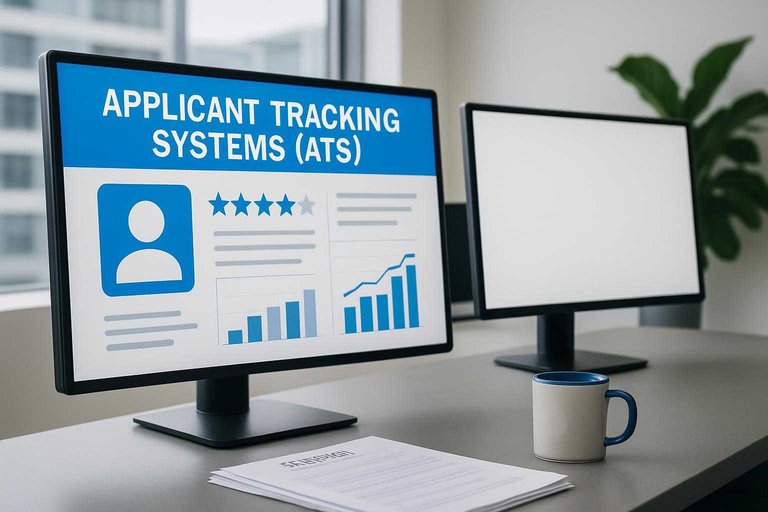
Standardized language or keyword stuffing triggers red flags.
Repetition and awkward terminology now signal algorithmic edits.
As a result, resumes shaped by bypass tools face added scrutiny; recruiters increasingly link linguistic patterns to AI-generated changes rather than the real voice of the applicant.
When Authenticity Suffers: Trade-Offs in Automated Editing
Targeting ATS optimization with automated resume editing weakens authenticity and individuality.
Features designed to boost machine visibility also strip away personal expression, which undercuts engagement from reviewers later in the process.
Loss of Personal Voice and Impact
Automated editing tools focus on keyword density and grammatical regularity, not on preserving original voice.
This creates resumes where leadership stories or achievement narratives turn generic, erasing vivid, action-oriented language that sets candidates apart.
Hiring managers say resumes processed like this blend together, making it harder for applicants to stand out—especially in competitive hiring rounds that can last several months.
Template Artifacts and the ‘AI Signature’ Problem
AI rewriters rely on industry-standard phrases, passive sentences, and overly formal language.
Repetitive use of these patterns creates a clear ‘AI signature’ that makes recruiters question authenticity.
In early review stages—within one or two reads—resumes with excessive uniformity or odd phrasing raise suspicion of algorithmic authorship.
Unlike most guides that focus on simple keyword optimization, this approach highlights how formulaic templating itself can undermine trust, even when the right keywords are present.
As recruiters demand more authentic self-presentation, these artifacts cut into applicant credibility.
Where Human Editing Shines — and Where It Stumbles
Human resume editing delivers nuanced alignment with target roles, recruiters, and employer culture—especially when industry or regional context matters.
Manual editing, though, brings clear tradeoffs: it moves slowly (professional turnaround spans 1-3 business days), costs more due to required expertise, and delivers variable results depending on editor skill and internal bias.
Unconscious preferences and subjective reading create inconsistent standards, especially when scaling to multiple resumes or job types.
Aligning Content With Role Requirements
Professional editors directly connect resume details to job requirements by rewriting content—matching keywords, tone, and action verbs to target industry listings.
In roles like software engineering, where team experience or agile practices are standard, editors highlight achievements such as leading cross-departmental projects or collaborating in Scrum teams.
This approach raises the chance of passing recruiter screening. Both ATS and human reviewers look for explicit, role-specific qualifications. Synapse’s ATS Bypass Engine is an example of a tool designed to optimize resumes for compatibility with applicant tracking systems, ensuring candidates’ resumes pass through algorithmic screenings.
Style Consistency and Subtlety: The Human Touch
Experienced editors enforce consistency in tone, tense, and phrasing, creating resumes that read as uniformly professional—something current large language models rarely manage.
Human editors fix or tone down résumé exaggeration and tune style for sector expectations (concise for finance, narrative for academia).
Resumes that look over-polished or generic get filtered by seasoned recruiters. Human editing embeds sector-specific detail and avoids this filter.
Limitations: Human Bias and the Scalability Trade-Off
Manual editing brings unconscious bias—favoring traditional formats or using language that downplays non-traditional careers.
The process runs slowly: AI tools generate tailored drafts in minutes, but human-led revisions take 24–72 hours, depending on complexity.
Results shift with editor quality and are unpredictable at high volumes.
For portfolios needing more than five applications a week, manual editing becomes both expensive and unsustainable compared to automation.
Detection Tech vs. Human Judgment: What Actually Decides the Outcome?
Resume screening depends on both applicant tracking system algorithms and human recruiter review.
Automated tools from top ATS platforms filter submissions by matching text against rule-based models or machine learning classifiers; human recruiters provide context, balancing automated findings with qualitative insight.
Success comes from understanding the patterns each system uses—and their unique limits.
Red Flags That Algorithms Flag Versus Human Redline
Screening algorithms systematically reject resumes missing target keywords, showing formatting inconsistencies, or presenting unexplained career gaps.
Leading ATS data shows filters trigger most often for lack of direct keyword matches or parsing errors.
These systems misclassify due to strict rules or incomplete data.
Human reviewers instead focus on narrative flow, logical progression, and credibility of achievements.
Where software rejects gaps, recruiters factor in outside context (like pandemic-related shifts) and may still move strong candidates forward. Meeting both ATS parsing logic and human interpretive standards drives the highest advancement rates.
Adaptability: How Quickly Each Approach Handles Shifting Standards
ATS and screening software operate on fixed logic, updated quarterly or annually by HR tech staff.
When new requirements appear—like surges in demand for AI/ML or remote skills—these systems lag, usually 1–3 months behind.
Human recruiters immediately adjust to real-time hiring shifts or employer feedback, but this adaptability varies, introducing inconsistency.
Algorithms deliver standardization and speed but trail current trends. Human reviewers adapt as needed, though only in organizations that keep training current or respond quickly to the market.
Cost, Speed, and Reliability: Where the Numbers Diverge
Evaluating AI detection bypass tools against human editors comes down to clear metrics—turnaround times, cost structures, and error rates.
These factors impact not just one resume, but a candidate’s entire application timeline, particularly under tight interview cycles.
Focusing on measurable performance makes it easier to match each method to specific requirements.
Turnaround Time and Predictability on Tight Deadlines
Automated AI bypass tools deliver fast, consistent results, producing output within 1-15 minutes of upload. This speed fits candidates facing 24-hour application windows or rolling deadlines where immediate submission is critical.
Human editing takes 24-72 hours per document, with possible delays if revisions or clarifications arise. Human workflows depend on editor availability and response times.
For applications with non-negotiable deadlines, automation guarantees quick delivery. Human editors offer deeper customization but introduce unpredictable delays.
Price Point vs. Value Delivered
Automated bypass tools cost between $0 (limited free use) and up to $50 per month for unlimited access, either flat-rate or subscription. Their value increases with frequent submissions—usually at five or more iterations per month.
Human editors charge $50-$300 per resume, depending on length, job type, and urgency, with rush jobs demanding as much as 50% more.
Automated tools create resumes that pass machine screens but often miss improvements in callback rates, since they rely on keyword rewriting. Human editors, who tailor resumes for language and achievements, improve callback and progression rates, as recruiters confirm.
Value should account for results across the application process—not just the upfront cost. Recruiters are increasingly challenged by an influx of AI-generated resumes, making it critical to consider not just price but the effectiveness of the approach.
Error Rates and Consequences for Missed Screens
AI automation produces a 5-15% false positive or negative rate, particularly in nuanced or keyword-heavy fields. Candidates risk rejection from both ATS systems that miss context and recruiters who notice awkward phrasing, extending job searches by several weeks per missed opportunity.
Human editors operate with under 3% error rates, adapting better to context and catching ambiguities that cause failures or lost recruiter interest.
In competitive fields, a single error can push candidates out of contention for 6-12 months until the next hiring round. Automation offers speed, but only human review limits continued opportunity loss in high-stakes cycles.
Making the Right Call: Matching Your Resume Strategy to Real
Choosing between AI bypass tools and human editors requires a direct look at review protocols and the real value of accuracy at each stage.
Data shows both methods vary in effectiveness depending on the automation level of resume screens.
When Bypass Tools Offer a Clear Edge
Bypass tools excel when ATS software serves as the initial filter—common in organizations handling 500+ applications per job (for example, in finance, tech, or federal sectors).
Here, algorithmic matching determines who advances, relying on precise extraction of role-based keywords in the first 24-48 hours. Bypass tools maximize passage through these filters.
However, once human reviewers step in, resumes built solely on keyword rewriting struggle, as they lack detailed achievement statements and get deprioritized.
When Human Editing Is Irreplaceable
High-impact, personalized roles like C-suite, research, NGO leadership, or consulting demand content with narrative, critical insight, and clear cultural fit.
Human editors adjust tone, context, and details to match organizational values, which recruiter surveys rank as top selection factors.
In fields where qualitative fit drives decisions—such as education, healthcare, or creative work—human-edited resumes consistently reach deeper into shortlists, improving callback rates by 10-30% over automated versions.
Most guides suggest that strong formatting and keyword optimization are sufficient, but human editing explicitly addresses subtler cues and unspoken expectations that automated tools miss.
A Hybrid Path: Combining Automation and Human Insight
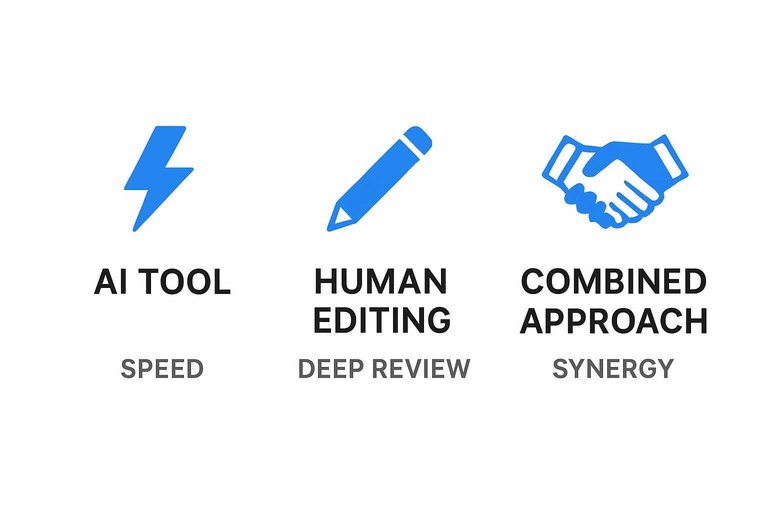
A hybrid model—starting with ATS-optimized drafts and finishing with human revision—delivers the strongest results in multi-layered hiring processes.
For high-volume jobs, automation handles the initial technical filter quickly.
For strategic roles or final rounds, human editors refine messaging to ensure machine compliance and unique narrative.
This combination cuts initial rejection rates and lifts conversion in manual reviews, increasing success at every stage of screening.
Decision Framework: Choose the Best Route for Your Next Application
Align your resume editing strategy with the demands of your current job search. Assess the industry landscape and hiring practices, then match them to the functions of available editing tools or services.
Define your objectives, address sector-specific resume expectations, factor in application deadlines, and confirm if your target employers use applicant tracking systems (ATS) or AI screening.
This structured approach supports a decisive, effective choice.
Self-Assessment Workbook: Map Your Job Search Context
Use these diagnostic questions to set your direction:
- Does your target sector require a distinctive personal voice or standardized clarity? Creative industries reward originality; technical and corporate fields value accuracy and structure.
- Do your target organizations—especially those over 500 employees—use ATS or AI-driven screening? Large firms automate first-pass filtering. Organizations with fewer than 100 staff typically review resumes manually.
- What is your current writing proficiency? If readability tools or peer feedback show only minimal grammar or clarity issues, light editing is sufficient. Persistent errors require comprehensive human editing.
- Can you access field-specific feedback? Insider advice from mentors or industry professionals reveals sector standards that generic or AI editors miss.
- What is your timeline? AI tools deliver results in minutes; thorough human editing takes at least 24-72 hours.
Record your answers. This process clarifies which editing workflow meets your needs.
Guided Recommendation Based on Use Case
- For applications due within 48 hours or for submitting to 10+ positions at once, use an AI detection bypass tool for speed and to satisfy AI screening.
- For roles requiring strong communication or personal branding (per job descriptions or industry standards), prioritize human editorial review for advanced tone and content feedback.
- If automated resume screening and high applicant volume are confirmed—as in large enterprises—use both: first, process your resume with an AI optimization tool, then schedule review by a field-knowledgeable human editor. This ensures ATS compatibility and strong qualitative appeal.
- For verified accuracy and a formal tone, common in regulated professions or senior roles, use domain-specific human editing.
Tie your editing process to hiring patterns and timelines. This raises your chances of passing both automated and manual review within the typical 2-6 week recruitment cycle.
 March 27, 2026
 January 29, 2026